

Pickleball-Related Eye Injuries
Pickleball-related eye injuries are on the rise due to the sport’s rapid growth in the United States, especially among adults aged 50 and older
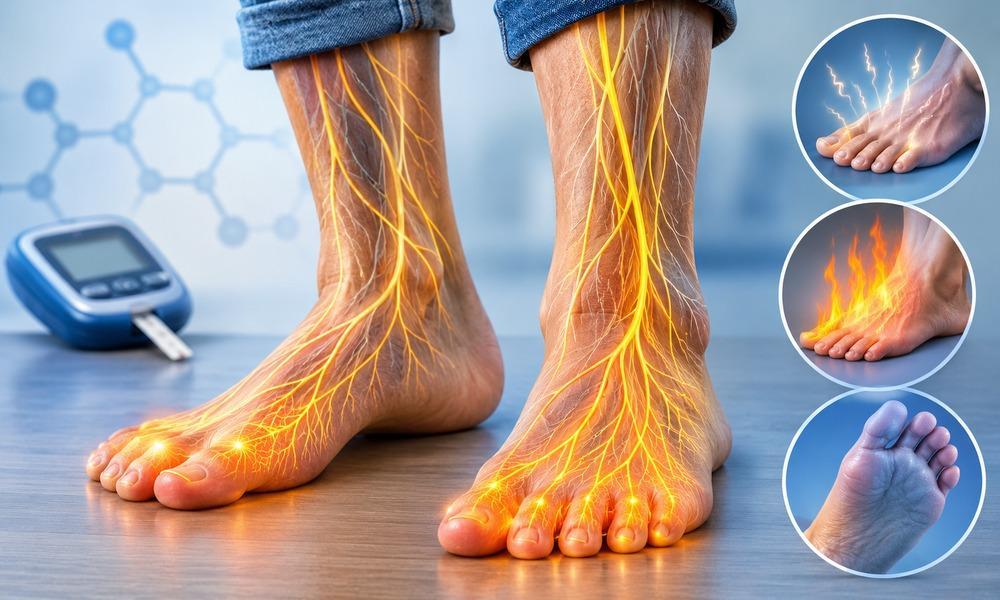
Have you ever climbed into bed at night, only to notice that your toes are tingling, burning, or feel as though you are wearing socks when you aren't? Perhaps your feet feel numb, or even the touch of your bedsheets becomes uncomfortable.
These symptoms may be more than an inconvenience. They can be early warning signs of diabetic neuropathy, a condition in which persistently elevated blood sugar damages the nerves.
One of the most concerning aspects of diabetic neuropathy is that it can develop silently. Some people experience considerable nerve damage without feeling pain or noticing any unusual sensations. Unfortunately, this lack of warning can allow minor foot injuries to develop into serious complications.
Understanding what happens to your nerves, recognizing the early symptoms, and obtaining regular examinations can help protect your feet and overall health.
Diabetic neuropathy is nerve damage associated with diabetes. Although several types exist, the most common is called diabetic peripheral neuropathy.
This condition primarily affects the nerves traveling from your spinal cord toward your feet, legs, and eventually your hands.
Think of your nervous system as the electrical wiring in your home. Your brain and spinal cord are the central control system, while peripheral nerves carry messages throughout your body.
The nerves traveling from your lower back to your toes are among the longest in your body. Because of their length, they are particularly vulnerable to the effects of prolonged elevated blood sugar.
That is why symptoms generally begin in the toes and feet, gradually moving upward toward the ankles and lower legs. Eventually, the fingers and hands may also become affected.
Doctors sometimes call this pattern "stocking-and-glove" neuropathy because the affected areas resemble the distribution of socks and gloves.
Nerves are living structures that depend on a healthy blood supply and a stable chemical environment.
When blood sugar remains elevated for prolonged periods, several harmful processes occur:
Excess glucose produces chemical stress inside nerve cells.
Inflammation and oxidative stress can injure nerve tissue.
The tiny blood vessels supplying the nerves may become damaged.
Over time, nerve fibers begin to deteriorate, particularly at their farthest ends.
Different nerves perform different jobs. Some carry pain and temperature information, while others transmit touch, vibration, and information about the position of your feet.
Damage to these nerves can produce burning, stabbing pain, tingling, numbness, and difficulty maintaining balance.
Diabetes can also affect autonomic nerves, which regulate automatic functions such as digestion, blood pressure, heart rate, and bladder function.
Consequently, unexplained dizziness when standing, digestive problems, or changes in bladder function should also be discussed with your healthcare professional.
Diabetic neuropathy can produce several different symptoms, including:
Tingling, buzzing, or pins-and-needles sensations in the toes.
Burning or electric-like pain, particularly at night.
Numbness or reduced sensation in the feet.
Feeling as though you are walking on cotton.
Increased sensitivity to bedsheets or light touch.
Difficulty recognizing hot water or temperature changes.
Poor balance, especially in darkness or on uneven surfaces.
Perhaps the most dangerous symptom is numbness.
Pain usually attracts attention. Numbness does the opposite. Someone with reduced sensation may walk around with a blister, cut, or small object inside their shoe without realizing it.
An untreated injury can develop into an infected wound or diabetic foot ulcer. In severe cases, these complications can eventually lead to amputation.
Seek prompt medical attention if you notice a foot wound that is not healing, unexplained redness, warmth, swelling, or drainage. A suddenly red, hot, swollen foot also requires urgent evaluation, even if there is no obvious wound. One possible cause is Charcot foot, a condition involving progressive weakening and collapse of the bones and joints.
Sudden foot weakness, rapidly progressing numbness, or new bladder or bowel control problems also require urgent assessment. Sudden weakness on one side of the body, facial drooping, or difficulty speaking may indicate a stroke. Call 911.
Not every person experiencing numbness, tingling, or burning in the legs has diabetic neuropathy.
Sometimes the problem originates in the lower spine.
A herniated disc or narrowing of the spinal canal, known as spinal stenosis, can compress nerves traveling into the legs.
There are some important differences:
Diabetic neuropathy commonly:
Affects both feet in a relatively symmetrical pattern.
Begins in the toes and gradually progresses upward.
Develops slowly over months or years.
May be particularly noticeable at night or while resting.
A pinched nerve in the lower back commonly:
Produces symptoms predominantly on one side.
Causes pain traveling from the back or buttock down the leg.
May worsen with standing or walking.
May improve when sitting or leaning forward.
Some individuals have both diabetes-related nerve damage and spinal disease.
A careful neurological examination, nerve conduction studies, electromyography (EMG), and sometimes an MRI can help determine the cause.
This distinction matters because treating spinal nerve compression may relieve symptoms caused by the spine, but it will not reverse diabetic nerve damage.
Other conditions, including vitamin B12 deficiency and thyroid disorders, can also damage peripheral nerves. People taking metformin for diabetes should discuss periodic vitamin B12 testing with their healthcare professional because long-term use can lower B12 levels.
Treatment has two important goals: preventing additional nerve damage and reducing discomfort.
1. Improve blood sugar control
Maintaining healthy blood glucose levels is the foundation of diabetes management. Good control can reduce the risk of developing neuropathy, particularly in type 1 diabetes, and may slow its progression in type 2 diabetes.
Blood pressure, cholesterol, weight management, physical activity, and smoking cessation are also important.
2. Medications for nerve pain
Several medication groups are used to treat painful diabetic neuropathy:
Gabapentin and pregabalin.
Duloxetine and other medications in the SNRI family.
Low-dose amitriptyline and related medications.
Certain sodium channel-blocking medications.
These medications do not work equally well for everyone. The choice depends on individual medical conditions, potential side effects, and cost.
The realistic goal is to reduce pain and improve sleep and daily function. Opioid medications are generally not recommended for routine treatment of diabetic nerve pain because their risks outweigh their benefits.
Topical capsaicin, derived from chili peppers, is another option for some patients.
3. Spinal cord stimulation
For selected individuals with severe diabetic nerve pain that has not responded adequately to medication, an advanced treatment called spinal cord stimulation may be considered.
A small implanted device sends controlled electrical impulses through wires positioned near the spinal cord. These signals modify how pain messages travel toward the brain.
Clinical research has demonstrated substantial pain reduction in many carefully selected patients.
However, this is an invasive procedure involving surgery, and infection and other complications are possible. It does not repair the underlying nerve damage. A specialist can determine whether someone is an appropriate candidate.
Preventing foot injuries is one of the most important things someone with diabetes can do.
Make these habits part of your daily routine:
Examine your feet every day, including the soles and the spaces between your toes. Use a mirror if necessary.
Never walk barefoot, even inside your home.
Check bathwater temperature with your hand, elbow, or a thermometer rather than relying on your feet.
Wear properly fitting shoes and inspect them before putting them on.
Report cuts, blisters, redness, or swelling promptly.
Have your feet examined regularly by a qualified healthcare professional.
Keep blood sugar, blood pressure, and cholesterol under control.
The American Diabetes Association recommends regular neuropathy screening. Testing commonly includes a 10-gram monofilament, which checks protective sensation, along with vibration and other sensory examinations.
For people with type 2 diabetes, screening should begin at diagnosis. For type 1 diabetes, it generally begins five years after diagnosis, with at least annual reassessment.
Do not wait for pain or numbness before requesting an examination.
Diabetic neuropathy is more than tingling toes or uncomfortable feet. It is a potentially serious complication that can interfere with balance, walking, sleep, and quality of life.
The most important point is that nerve damage can develop without obvious symptoms. Regular examinations, daily foot inspections, good diabetes management, and early treatment can make a meaningful difference.
If your feet have been burning, tingling, or feeling numb, do not simply assume it is part of getting older.
Bring it to the attention of your healthcare professional. Sometimes the smallest sensation is the earliest warning sign of a much larger problem.


