

Pickleball-Related Eye Injuries
Pickleball-related eye injuries are on the rise due to the sport’s rapid growth in the United States, especially among adults aged 50 and older
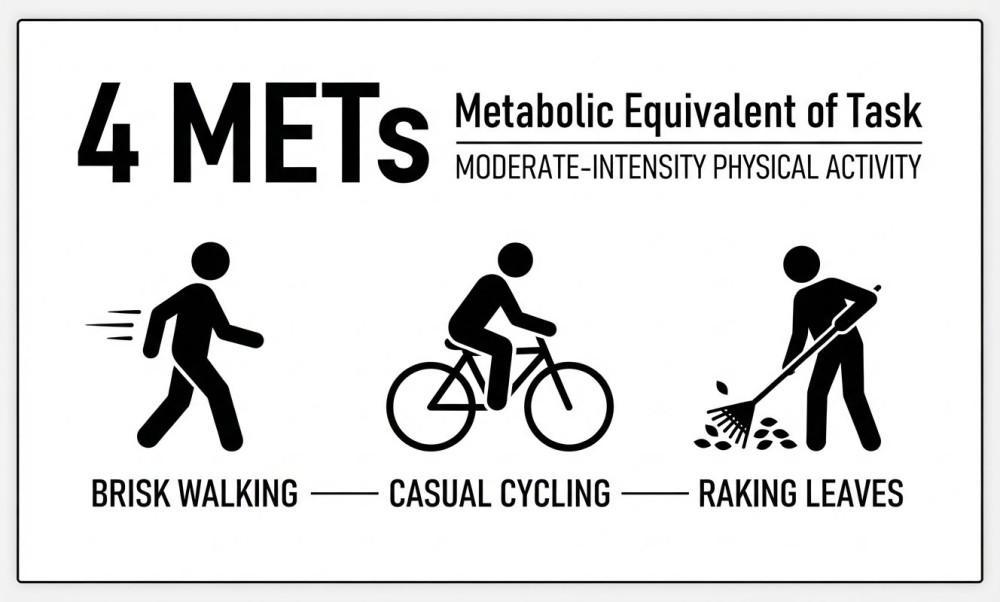
Have you ever wondered how much effort your body puts into everyday activities like walking, climbing stairs, or gardening? Doctors and healthcare professionals sometimes use a measurement called METs to describe how physically demanding an activity is.
But what exactly does it mean?
MET stands for Metabolic Equivalent of Task. It is simply a way of measuring how much energy your body uses when you are doing an activity compared with when you are resting.
Think of it this way:
1 MET is the amount of energy your body uses when you are sitting quietly or resting.
2 METs means your body is using about twice as much energy as it does at rest.
4 METs means your body is using approximately four times as much energy as it does at rest.
In simple terms, the higher the MET number, the harder your body is working.
Physical activities are generally divided into three levels based on how much effort they require:
Light activity: Less than 3 METs.
Moderate activity: 3 to 5.9 METs.
Vigorous activity: 6 METs or higher.
This means that 4 METs falls within the moderate activity range.
At this level, you may notice that your breathing becomes a little faster, your body feels warmer, and your heart beats faster. You should generally still be able to carry on a conversation, although singing might be difficult.
You might be surprised to learn that several ordinary activities can require around 4 METs of effort.
Examples include:
Walking briskly at approximately 3–4 miles per hour.
Climbing a flight of stairs.
Doing heavier gardening or yard work.
Riding a bicycle at a leisurely to moderate pace.
These activities give us a practical way to understand what a moderate level of physical effort looks like.
The 4-MET level is often used in healthcare as a general measure of someone's ability to manage everyday physical activities.
For example, before certain surgical procedures, doctors may ask whether a person can climb stairs, walk at a reasonable pace, or do household chores without experiencing significant symptoms.
Being able to perform activities requiring around 4 METs without major symptoms can provide useful information about a person's physical fitness and functional capacity.
However, it is only one part of the overall health assessment. It does not replace a medical evaluation.
MET values are estimates, not exact measurements of how hard an activity feels for every individual.
For example, walking briskly may feel relatively easy for someone who exercises regularly but quite challenging for someone who is older, less active, or living with a medical condition.
Age, body size, fitness level, and overall health can all influence how much effort an activity requires.
The Bottom Line
Think of 4 METs as a simple way of describing moderate physical activity. It gives healthcare professionals and individuals a common reference point for understanding how well someone manages everyday physical tasks.
It is not about being an athlete or exercising intensely. Sometimes, something as ordinary as walking briskly or climbing stairs can tell us quite a bit about our ability to stay active.


